

 Posted by
 The lawsuit is in. The press release is out. The press conference is Friday.
FOR IMMEDIATE RELEASE
October 8, 2026
Contact:
Natasha Perdew Silas
Federal Defender Program, Inc.
Federal Defender Program Sues U.S. Marshals Service to Stop Transfer of Atlanta Pretrial Detainees to Irwin County
Lawsuit says moving hundreds of people nearly 200 miles from their lawyers violates their constitutional rights.
ATLANTA – The Federal Defender Program has filed a federal lawsuit against the U.S. Marshals Service over its plan to move approximately 400 people awaiting trial in the Northern District of Georgia from the Robert A. Deyton Detention Facility in Lovejoy to the Irwin County Detention Center in Ocilla, more than 190 miles south of Atlanta’s federal courthouse.
The decision to cancel the contract with the Lovejoy facility, approximately 25 miles from the courthouse, was made by the national leadership of the Marshals Service, more than a year before the contract was scheduled to expire in February 2028. The Marshals Service began transferring detainees on September 21 and plans to complete the transfers by October 31.
“It brings me no joy to take this legal action,” said Natasha Perdew Silas, executive director of the Federal Defender Program. “I have practiced in this courthouse for more than three decades. Although we litigate hotly contested matters in the courtrooms in this building, I have tremendous respect for the people who work here, including our local Marshals, who have been thrust into an untenable situation. The decision to cancel this contract without first securing a local detention solution was irresponsible. That decision was made outside our community, but its consequences are being felt right here, by our clients, their families, their lawyers, and the courts.”
The Marshals Service has described Irwin County as an interim solution. But Silas says that characterization ignores the immediate constitutional rights at stake.
“The problem with using Irwin County as an interim solution is that our clients do not have interim cases, and they do not have interim constitutional rights,” Silas said. “These are serious cases, and they are pending now. I cannot tell a client that their case just happened to come along when the Sixth Amendment wasn’t being enforced. Meaningful access to counsel is not a luxury or a convenience. It is a constitutional requirement.”
The Sixth Amendment guarantees the right to counsel, and federal law requires that people held before trial have a reasonable opportunity for private consultation with their attorneys.
“Our clients are making some of the most important decisions of their lives—whether to plead guilty, go to trial, or cooperate with the government,” Silas said. “You cannot adequately prepare someone for those decisions through video calls. You have to sit across the table from people, reviewing the evidence together, building trust, and preparing a defense.”
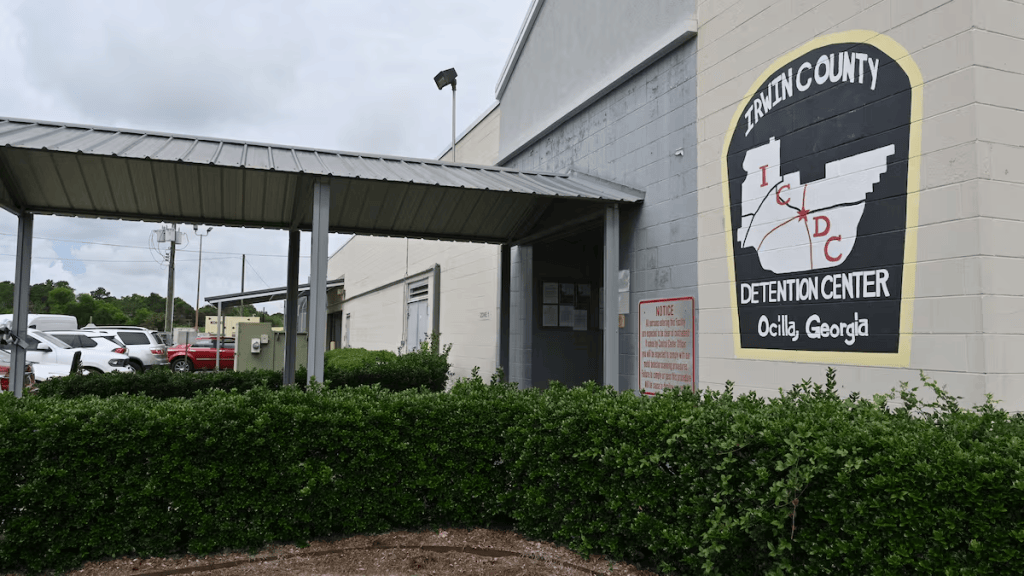
The complaint also argues that the transfer violates detainees’ due process rights. A detainee required to appear in court at 9:00 a.m. would have to awaken around 3:30 a.m. and would not return to Irwin County until approximately 9 p.m. These exhausting trips interfere with detainees’ ability to participate meaningfully in their defense and consult with counsel during critical proceedings.
The transfer comes at a time when the U.S. Attorney’s Office has significantly increased federal prosecutions in the Northern District of Georgia. The added demands of traveling nearly 200 miles each way to meet with detained clients will place an enormous strain not only on defense attorneys and their staff, but also on the courts and their already busy dockets.
The consequences extend beyond the courtroom to taxpayers. A round trip from the Federal Defender Program’s Atlanta office to Irwin County takes approximately six hours, not including any time spent meeting with clients. The Program estimates that travel costs alone will add approximately $1.3 million annually to its budget. For private attorneys appointed to represent detainees at taxpayer expense, each trip to Irwin County could add approximately $1,000 to the cost of providing court-appointed representation.
The lawsuit also raises serious concerns about the destruction or abandonment of detainees’ legal mail, including privileged attorney-client correspondence. Although the Marshals Service contracted with a third party to transport detainees to Irwin County, it retains responsibility for ensuring that their legal correspondence accompanies them. The complaint alleges that privileged attorney-client correspondence was destroyed or abandoned rather than transported with the detainees, threatening the confidentiality of attorney-client communications and undermining detainees’ ability to prepare their defense.
The Federal Defender Program is asking the court for an emergency order to stop the destruction of legal mail and require the Marshals Service to ensure its delivery to detainees. It is also seeking a preliminary injunction requiring the Marshals Service to house its clients close enough to Atlanta that they can meet meaningfully with their attorneys.
The plan has drawn widespread opposition. In August, Chief U.S. District Judge Leigh Martin May wrote to the Justice Department on behalf of the entire court, warning that ending the use of the Lovejoy facility would be “a catastrophe” and would lead to delayed and canceled proceedings. Georgia Senators Jon Ossoff and Raphael Warnock have also pressed the Marshals Service for answers about how detainees will maintain access to their lawyers and families.
If the transfer proceeds, Atlanta will be the only one of the nation’s ten largest metropolitan areas without a local detention facility for people facing federal criminal charges.
“This crisis did not have to happen, and it should not be left to our clients to bear its consequences,” Silas said. “From the courthouse steps, you can actually see the Atlanta Pretrial Detention Center, just six blocks away. I am told that facility has hundreds of available beds. Yet our clients are being transported nearly 200 miles away from their lawyers, their families, and the courthouse. Surely, we can come together as a community to find a better solution—one that protects our clients’ constitutional rights and the fair administration of justice.”
The case is Federal Defender Program, Inc. v. United States Marshals Service, 1:26-CV-5788-MHC, filed in the U.S. District Court for the Northern District of Georgia. The Federal Defender Program is represented by Uchenna Ekuma-Nkama, Alize’ D. Mitchell, and Lauren J. Towell of Dentons US LLP.

